

Katy AustinTransport correspondent

 BBC
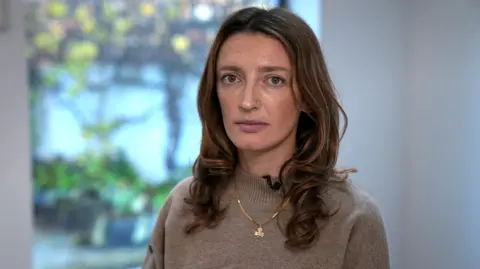
BBCClaire Corkery was out celebrating a friend’s engagement when a call from a policeman changed her life forever.
Her parents, Sue and Tom, were walking on a country road when they and the dog they were looking after were hit by a speeding driver and killed.
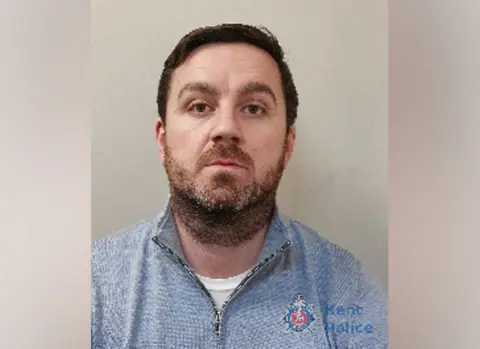
Last week, Scott Gunn, who had reached 87mph in his BMW X5 shortly before the crash, was found guilty of death by dangerous driving and jailed for 16 years.
Claire is calling for “cultural change” around speeding, which is the most common factor recorded in fatal collisions in Great Britain, according to official data.
 Claire Corkery
It was a normal Saturday in January 2024, when Claire was enjoying celebratory drinks with friends, that she spotted a missed call and a message from a policeman.
When she called back, he said it was about her mum and dad, and he needed to speak to her in person.
“I think I knew they were both dead,” she said.
“I had them both on “Find my Friends” and I couldn’t see where they were. I tried to call them but it went to voicemail.”
She met the police officer at her house, where he delivered the worst possible news.
Claire was told there had been ice on the road, and thought it must have been a tragic accident.
Sue was a former children’s nurse who Claire describes as a “very warm person”.
Tom was an accountant, a “very clever man”, who liked to help other people. He was about to retire. More than 300 people attended the couple’s funeral.
The police investigation revealed Gunn had driven the BMW he had recently bought at 87mph shortly before the crash, on Thurnham Lane, in the village of Bearsted in Kent.
He had denied causing death by dangerous driving, but was found guilty following a trial.
 Kent Police
For Claire, the sentence brought “a sense of relief”. However, she also feels “a pain that’s always there”.
“Weddings, birthdays, celebrations, these are joyous moments… But when you have these moments and you’ve lost someone, the joy becomes bitter sweet.”
Earlier this year Claire became a mum. “It was really hard going through the pregnancy without my mum and dad,” she said.
“I feel we’ve been robbed. My parents would have been fantastic grandparents. They were so loving and so generous with their time.”
Speed most common factor in road deaths
Last year, 1,600 fatalities were reported in road collisions in England, Scotland and Wales. This represented a slight fall of 1% compared to 2023.
Speed was the most common factor recorded in fatal collisions, according to official statistics published by the Department for Transport.
The data also indicates that although more casualties occur on roads in urban areas, collisions in rural areas are more likely to result in death.
In 2024, the majority of road fatalities, 60%, occurred in rural areas – despite those roads taking 45% of traffic. Motorways accounted for just 6% of deaths.
‘Worst examples for some time’
Nicholas Lyes, from the road safety charity I AM Roadsmart, described the death of Claire’s parents as “an example of serious speeding and dangerous driving, probably one of the worst examples that I’ve seen for quite some time”.
He said investment is needed to make rural roads safer.
On road safety in general, Mr Lyes said: “I feel that we’ve had something of a lost decade. We’ve seen the number of road traffic collisions and particularly serious [incidents], effectively plateaued. So we’re not seeing any great improvement on the numbers.”
He argues a “perceived lack of enforcement” could have a part to play on this, but adds “what we really need to see is an updated road safety strategy”.
The government is expected to publish a new road safety strategy by the end of the year.
A Department for Transport spokesperson said it was “committed to reducing deaths and injuries on our roads, and our forthcoming Road Safety Strategy, the first in over a decade, will set out further measures to keep people safe.”
‘Cultural change’
Claire’s anger at the driver who killed her parents is palpable as she speaks to the BBC in her new house in south west London.
“The fact anyone could be so selfish just shocks me today,” she said.
She would like her story to make people to think carefully about how they drive.
“We need to see a cultural change in how we approach speeding and road safety in general,” she said.
“When we talk about speeding we kind of dismiss it, people say ‘oh god, a speeding fine’. They kind of shrug their shoulders and it’s almost like it’s socially acceptable. But it shouldn’t be.”
“A few seconds is all it takes. My life is completely changed because of it.”
“Speeding, even for a few seconds it’s not worth it – get to your destination five minutes later,” she said.
“If you are caught speeding and you go on a speed awareness course, or get your 3 points on your licence, take it really seriously and learn from that. And if you can’t learn from it, then you shouldn’t be driving.”
Chief Inspector Craig West of Kent Police’s Roads Policing Unit urged motorists to observe the highway code, particularly in poor weather conditions.
“We remind road users that stopping distances double in wet weather and can be up to 10 times greater in snow and ice. Please drive responsibly, especially as the winter weather sets in,” he said.

